
Why Mixbound Won’t Fix Your GTM: The Real Future of Signal-Driven Marketing
Marketing evolved from inbound to outbound to mixbound, yet revenue teams remain disconnected. Learn why ABM tools don’t solve alignment and what the next generation of go-to-market looks like.
 Isabel Reyes

From Inbound to Outbound to Mixbound
Marketing keeps reinventing itself.
First came Inbound, the belief that customers would come to us.
Then Outbound, the chase to go get them.
Now, everyone is talking about Mixbound, the idea that combining both will finally solve everything.
I’ll be honest — I believed in it too.
I even changed “Mixedbound” to “Mixbound” because I thought it deserved to sound like a real movement.
At one point, I even joked it could be a summit, just like INBOUND but smarter.
That version of me was hopeful.
But after f testing ABM tools, running lifecycle experiments, and challenging every “best practice” in GTM, I learned a hard truth.Mixbound is not the answer.
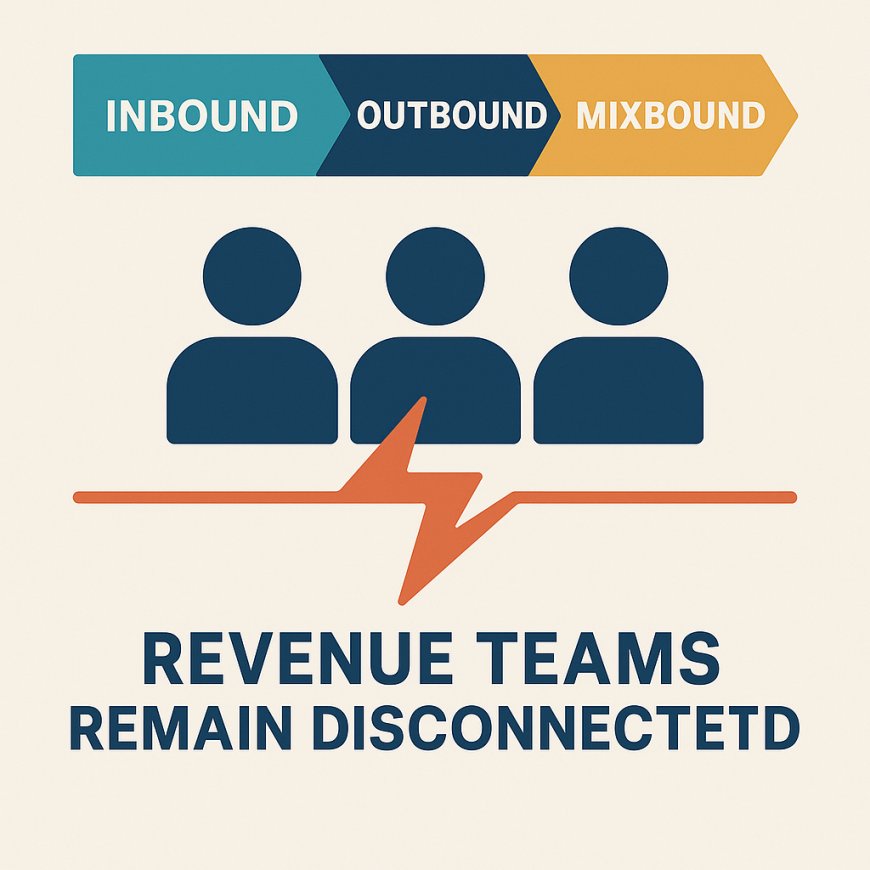
Photo generated with ChatGPT.
It still stops at the campaign layer — far from the real alignment between marketing, sales, and customer success.
The ABM Illusion: Visibility Is Not Alignment
Every ABM platform sells the same dream:
alignment, orchestration, intent, personalization.
But the reality?
Most vendors do not even apply these principles to their own clients.
I can tell because I used to sell ABM too.
Here is what really happens.
You integrate, you onboard, you prepay your annual budget, and eight months later you realize the tool did not fix your go-to-market system.
It only made the cracks visible.
Marketing sends "warm" leads to nowhere.
Sales ignores half of them.
Customer Success joins too late.
Operations tries to connect the dots.
You do not have alignment.
You just have a clearer view of the chaos.
“But Isa, Some Companies Say It Works”
That is true.
But when you look closer, it did not work because of Mixbound.
It worked because those teams already had the capacity to act fast.
Their lifecycle and communication were solid.
They knew how to guide the buyer through every step, with the right content, touchpoints, and support.
That is not Mixbound.
That is operational excellence.
And you cannot buy that from a platform.
Why Mixbound Fails the Modern Buyer
Mixbound sounds good in theory.
Combine inbound and outbound. Add intent data. Sync everything.
But the modern buyer does not move in straight lines.
Their journey is unpredictable, fast, and multi-channel.
Mixbound still waits for marketers to notice intent before acting.
By the time that happens, the buyer has already moved on.
That is not orchestration.
That is delay.
The Real Bottleneck: The Signal-to-Action Gap
The problem is not a lack of data or intent signals.
It is the delay between signal and action.
Every time an account visits your pricing page, engages with your content, or compares you to competitors without a quick follow-up, you lose momentum.
It is not a visibility issue.
It is an activation issue.
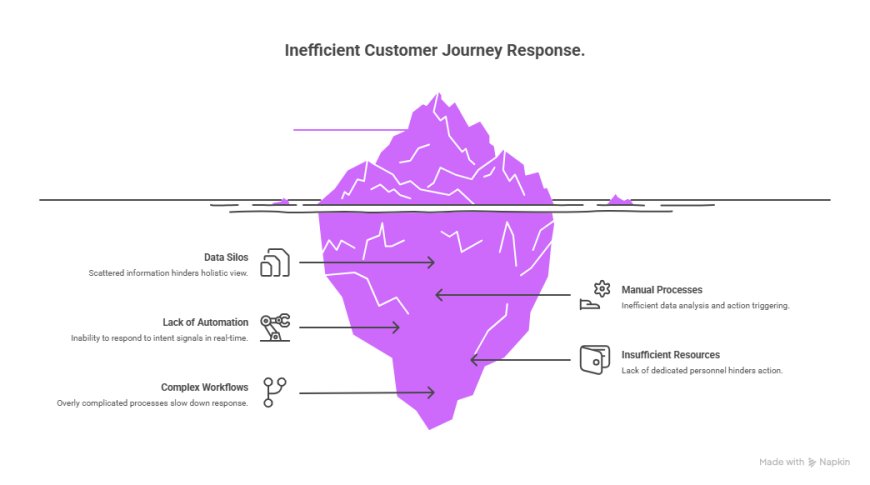
Photo made with Napkin.
Until marketing, sales, operations, and customer success work in a continuous loop that reacts in real time, no platform will create real alignment.
We do not need more dashboards.
We need faster decisions.
Before You Buy Another Platform
Before you commit to another tool to “prove marketing’s value,” ask yourself:
-
How fast does your team respond when a buying signal appears?
-
How quickly does marketing hand it to sales?
-
Does Customer Success ever get that context early?
-
How connected is your entire lifecycle?
The biggest go-to-market problem is not visibility.
It is speed.
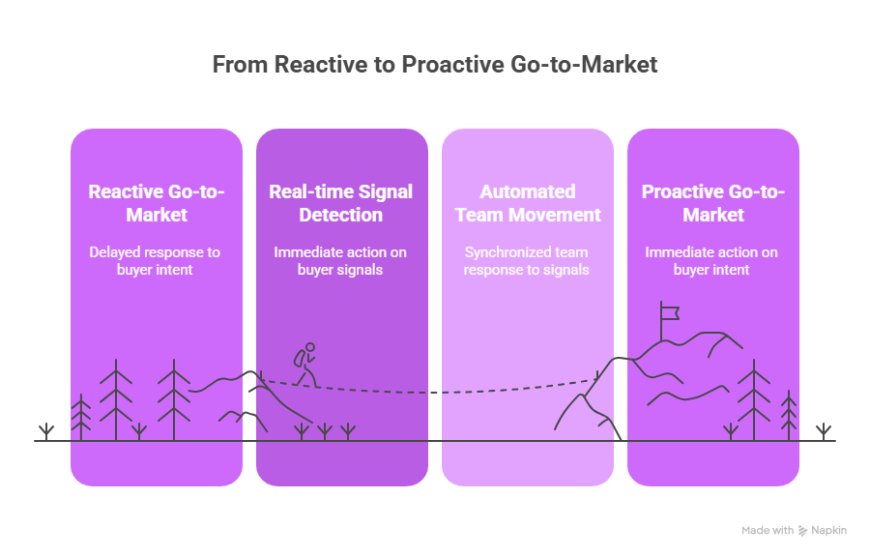
The Next Phase: Signal-Driven GTM
The next evolution of go-to-market will not be inbound, outbound, or mixbound.
It will be signal-driven or as I call it signal loop.
In a signal-driven model, intent is not analyzed later — it is acted on immediately.
Signals do not sit in dashboards — they trigger motion.
When a buyer moves, your team moves too.
Automatically, intelligently, and in sync.
And maybe, you will soon see and even try for yourself what I am talking about.
Maybe I am already building it.
Maybe not.
We will have to wait for 2026 to find out.
Food for Thought
When a buying signal appears in your company, how long does it take before someone acts?
That response time defines your competitiveness more than any campaign ever will.