

Retention Is the New Acquisition - Why Churn Control Beats Lead Volume in Tough Markets!
Most SaaS teams focus on acquisition and ARR while ignoring churn — the silent killer of growth. This article explores why retention is the new acquisition strategy, how marketing must own NRR and customer expansion, and the key retention plays that drive sustainable SaaS growth.
 Ayse Guvencer
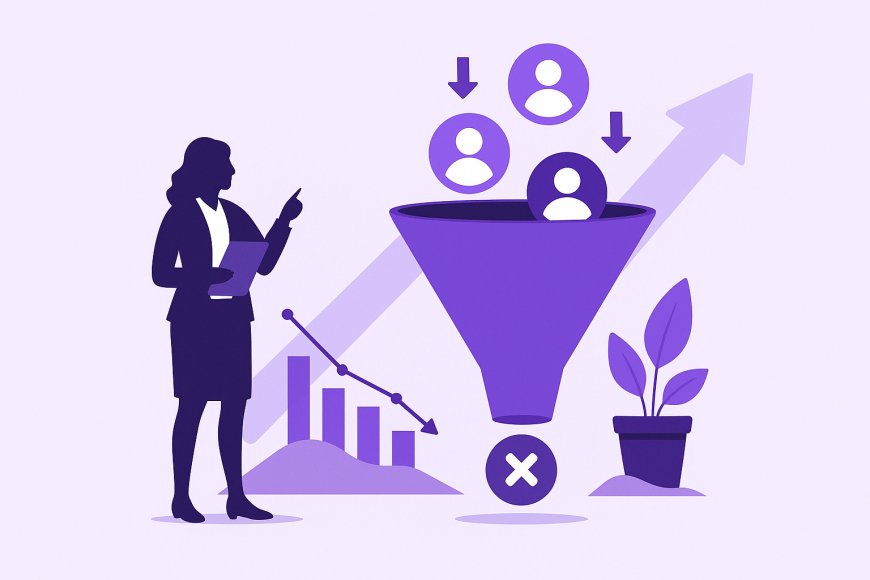
The Leaky Bucket Problem
Acquiring a new customer costs 5–7x more than keeping an existing one. Yet most teams still pour budget into demand gen, ignoring the silent killer - churn.
In SaaS, we are too focused on ARR. Marketing is consumed with acquisition, sales are obsessed with pipeline velocity. Rightly so, net new logos and the pipeline health are crucial.
However, one thing that comes almost second is NRR. Churn management and forecasting are usually done in a very rigid manner. This limits the chance to intervene at the right moment to prevent the account from being lost.
While the C suit is focused on the ARR and acquisition, there is no point in filling up the tank while the pipes are leaking.
Who Owns Churn?
Churn is mostly left to Customer Success. They are the ones talking to the customers all the time. So, the likely place to have these discussions seems to be in those calls.
However, if the place is only the CS and there is no other function in the business owning the retention conversations, which in my experience is usually second to the acquisition efforts, then there is trouble.
NRR is not only a fancy metric, but also the stickiness of the product, it is PMF, it is market proof. It is also your insurance when the market turns and recession hits. It should be taken seriously.
Why Retention > Acquisition Right Now
- Unit economics: A 5% boost in retention can lift profits by 25–95%.
- Compounding growth: Loyal customers expand, refer, and advocate.
- Risk mitigation: In volatile markets, retention is the most predictable growth lever.

I have seen this time and again in my previous roles. The teams that are working on reducing the churn ratios are usually siloed, dabbling on solving the puzzle that should concern everyone in the company.
This is not just a CS, marketing, revenue, sales issue. This is an everyone issue.
Upsell/Cross Sell, retention are always going to be cheaper than efforts to acquire a new customer.
LTV:CAC is rapidly increasing ( this fully loaded debt is not also only for marketing but sales as well)
The competition in top categories is fierce in SaaS. Churn control beats pipeline volume in tough markets.
This is especially true with the AI natives getting into the space. When the SaaS seat based pricing has cracked with outcome based models, with Software as a Service becoming Service as a Software, churn needs to be calculated much in advance.
The signals should be modelled out long before the account is in jeopardy.
Marketing should own retention and expansion and not just acquisition. Opposite happens because majority of marketing is considered as promotion. When you are boxed into that category, you are not expected to venture outside of acquisition efforts.
This also leads to inaccurate contribution to risk reduction and makes marketing OpEx instead of CapEx.
Marketing is risk reduction to tangible and intangible assets. This means the entire brand and end to end revenue operations.
Churn management can’t be left to its own demises. It needs a healthy framework that is owned by everyone in the company.
In the marketing org, customer and lifecycle marketing are usually scrambling to make this happen.
In smarter enterprises, this is managed brilliantly. However, the other way around is more common than you think.
The Strategic Shift for Marketing
- Retention isn’t only CS’s job - marketing must own lifecycle comms.
- Rethinking spend allocation - less on sheer volume, more on deepening existing relationships.
- Framing retention as growth insurance in turbulent times.
5 Retention Plays Marketing Can Own
1. Lifecycle Journeys
- Onboarding sequences that speed up “time-to-value.”
- Milestone nudges (“90 days in - here’s how to unlock more ROI”).
- Win-back automations triggered by inactivity.
2. Success Content
- Bite-sized how-to videos, feature spotlights, and playbooks.
- ROI case studies that remind customers of the value they’re already getting.
3. Community & Advocacy
- Roundtables, peer groups, or private Slack spaces.
- Customer champion programs that reward and spotlight your power users.
4. Data-Driven Personalization
- Usage-based comms (“noticed you haven’t tried X yet - here’s how it helps”).
- Churn prediction triggers that fire marketing interventions before CS escalates.
5. Value Reinforcement
- Quarterly executive newsletters with ROI snapshots.
- Health score reports sent proactively to decision-makers.
Retention is not an afterthought.
It’s not a CS-only problem. It’s the most important acquisition strategy in a downturn.
In 2025, the smartest marketing leaders will reallocate spend: Less on sheer lead volume, more on deepening existing customer relationships.
Your Move
This month, pick one retention lever to launch:
- A re-engagement journey.
- An executive-facing value report.
- Or a customer community touchpoint.
Small actions compound and they beat chasing vanity lead metrics every time.
ARR looks good. What looks even better is the uptick in NRR lift.








![Growth Marketing Trends 2025: Key Insights from the First TGS Conference in Amsterdam [Recap]](https://blog.notanothermarketer.nl/uploads/images/202509/image_430x256_68da78ca6623a.jpg)