
Congratulations! OpenAI Is Building an Agentic Operating System!
With Atlas entering the browsing space, OpenAI is not only focused on an agentic browser. It set its sights on building an agentic operating system. This changes the game in terms of how not only how information is consumed, discovered on the open web, but with buying bots and autonomous agents, this also drastically changes the buying behavior; not only for retail and ecommerce but with SaaS buying committees as well. Atlas is the new most influential buying committee member as it intervenes during the research process. We should all be ready for these changes.
 Ayse Guvencer
Last week, we saw the launch of OpenAI’s agentic browser, Atlas. What makes it different than Perplexity’s Comet is that it is autonomous.
Unlike Comet which needs user prompts, Atlas can complete tasks in the background without you switching through tabs.
The example where the user is on an ecommerce site about to purchase a product, starts chatting with Atlas, and Atlas recommends another brand. This is a drastic change in the user purchase behavior.
For SaaS, this has wide implications as well. Whoever in the buying committee is doing the research, regardless of brand or category aware, will compare prices, features, frameworks and will be recommended a brand.
This is not just a user behavior change. This is intervention at the research process. Atlas just became another stakeholder in the buying committee, much more influential than we can ever anticipate.
Atlas will keep the ChatGPT memory and constantly learn from user interactions and browsing behavior. You can ask ‘do you remember the news I was looking at two weeks ago, can you tell me what the latest is’, the answer will be in front of you in about 2 seconds.
I don’t think OpenAI is done with only an agentic browser.
Together with the integration of apps like Spotify, Expedia, Canva, Figma and an apps SDK, OpenAI is very deliberately moving towards becoming an AI operating system rather than just a chatbot.
With Atlas, OpenAI isn’t just giving you a browser with an AI-sidebar; it’s embedding the assistant into the context of nearly all web activity; remembering past browsing, reading pages, offering to act on behalf of the user (agent mode).
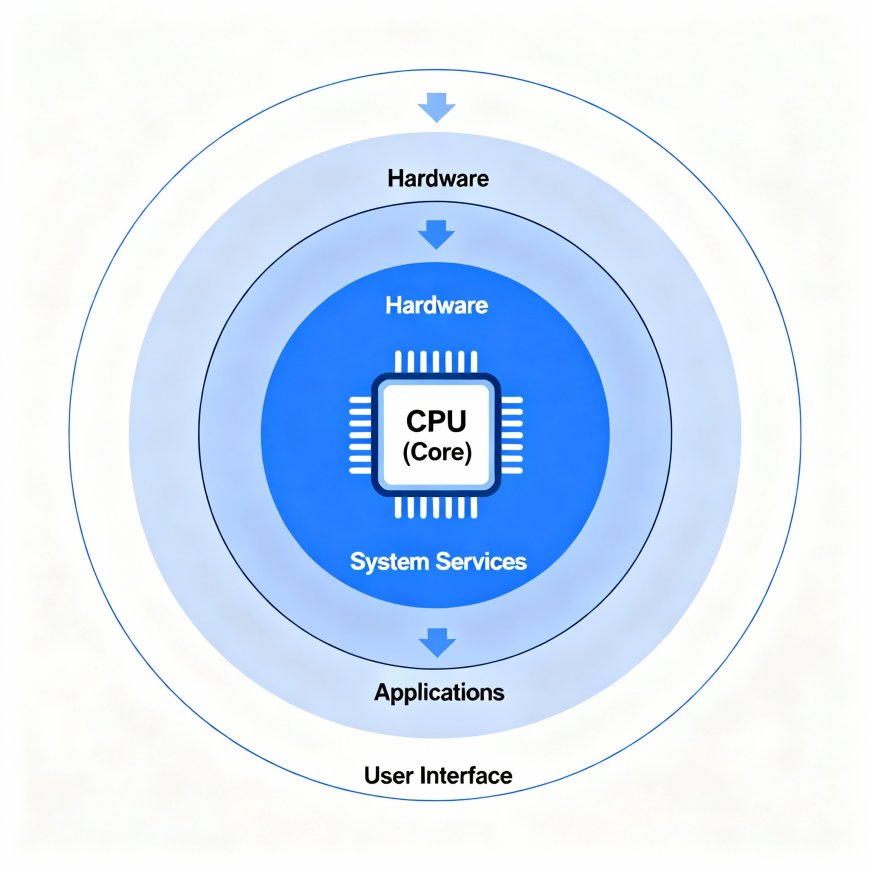
If you think of an operating system not just as “runs apps” but “manages context, workflow, user intent, memory, environment”, Atlas is beginning to look a lot like an operating system already.
The “browser memories” feature in Atlas means the system retains context about what you’ve done, what you’ve browsed, and all your habits.
That context can be used to drive workflows, suggestions, proactive help; again, like an OS.
With the browser + assistant + apps model, OpenAI has strong control: interface, distribution, gateway to user. That is what OS is in reality.
For example, in chat you could be prompted with “we found this deal via Expedia app” or “Do you want us to compare flights”. That’s a workflow inside the OS.
What Are the Implications?
· The “Front End” Of the Web Becomes Invisible: Instead of typing in URLs or seeing search results, you see outcomes.
· Websites Become APIs: To stay accessible, companies will have to have structured data and action endpoints for AI agents to interact with (booking, buying, scheduling, searching).
AIO Rises: Instead of optimizing pages for ranking, brands will optimize data and API accessibility so that agents can fetch or act on their behalf.
Web Design Becomes Context Design: If users no longer see your UI, your UX shifts from visuals to how your data and intents integrate with agents.
Shift in Power: From Platforms à Protocols à Agents
The last two decades, the ecosystem was dominated by platform monopolies- Google, Meta, Apple, Amazon.
Agents like ChatGPT Atlas threaten this hierarchy by becoming meta-platforms; orchestration layers sitting on top of platforms.
· Gatekeeper Shift: Instead of Google directing traffic to websites, ChatGPT decides which platform or app to call for a given user intent. That’s a massive redistribution of digital power.
· Platforms Risk Disintermediation: Spotify, Expedia, Uber, etc. integrate because if they don’t, the agent might bypass them in favor of another API that answers the same user intent.
· New Dependencies: Third-party apps depend on OpenAI for distribution, just like mobile apps depend on Apple/Google.
Operating System Convergence: Browser = OS = Agent
Atlas blurs the line between a web browser, an operating system, and a personal assistant.
It manages context, memory, and task execution which are all classic OS responsibilities.
· Device OS Relevance Declines: If the assistant layer works across macOS, Windows, iOS, Android, the underlying OS becomes a commodity.
· Hardware Integration: We will see agent-native hardware; voice wearables, AI phones, desktop “agent bars” designed for constant interaction with the OpenAI layer.
· OS Competition: iOS and Android could face direct competition not as hardware but as attention.
· Software Interoperability: If OpenAI becomes the execution layer, existing OS APIs (Apple, Android) may conflict or be bypassed, creating technical and antitrust tension.
Rewriting the Advertising & Commerce Stack
Analysts already say Atlas “could threaten advertising revenue from Google”.
I have recently seen a job opening at OpenAI for a growth engineer. The job description reads like a MarTech engineer – any company building in house MarTech means serious business.
Owning the audience and the buy side platform will give OpenAI the same privileges that Google has been enjoying as a monopoly for the past 2 decades.
Other than the unintended consequences; with an agentic browser, ads evolve from passive display to contextual action suggestions.
· Search Advertising Changes: If users don’t see results pages, there are no ad slots; instead, monetisation occurs at decision points (“book this trip”, “play this playlist”).
· Transaction Ads: Every agent-triggered booking or purchase could include a commission or referral fee.
· Martech Consolidation: OpenAI may own both the recommendation layer (intent understanding) and the ad execution layer (fulfilment).
· Massive Data Shift: OpenAI’s memory of your browsing, messages, and app usage gives it an immense view of consumer intent; far beyond what Google or Meta currently have.
· Policy: Regulation for “AI-mediated commerce” doesn’t yet exist; we need new standards for disclosure, consent, and recommendation bias.
Privacy and Regulation Challenges
Memory and agentic execution mean persistent, cross-site user tracking at a deeper level than cookies or device IDs.
· Personal Data: Atlas merges browsing data, app use, and conversations into one memory graph; potentially more invasive than cookies ever were.
· Regulation: Under GDPR, DSA, DMA and upcoming AI Acts; the line between “personalization” and “profiling” becomes razor thin.
· Government Scrutiny: Governments and corporations may push for AI assistants or region-specific AI OS to prevent data monopolies.
· Consent: Continuous context-retention requires dynamic, transparent user-permission models, likely standardized by regulators – which we have seen how that turned out the past 2 decades; not in the interest of the user or the well-being of the entire ecosystem.
What Will We See - Walled Garden vs Open Web?
Scenario A: The Walled Garden
- OpenAI centralizes data, discovery, and commerce. Developers and brands integrate via approved SDKs; OpenAI mediates all interactions.
Scenario B: The Agentic Internet (Open Protocols)
- Agents interact via standardized APIs and semantic protocols. OpenAI competes with open-source or decentralized assistants (Claude, Gemini, Perplexity, etc.).
Scenario C: Dual World
- OpenAI’s Atlas/ChatGPT dominates consumer AI; enterprises and governments build “AI OS” layers for internal use.
Meta-Implication: The Web Becomes an Intention Graph
Whatever happens, we are moving towards the Internet reorganizing around user intent rather than links or apps.
- Instead of “browse → click → buy”, it’s “express intent → agent acts”.
- The agent layer becomes the primary governor of digital interactions
Whoever owns that layer will control the next era of digital life: data, labor, and attention.
The question is are we ready for this and do we have the right guardrails in the ecosystem to prevent any unintended consequences.
We don’t know what we don’t know but my gut tells me that we will get there real fast real soon.
We better brace for drastic change – for the better or for the worse; that is the $1trillion question.








![Growth Marketing Trends 2025: Key Insights from the First TGS Conference in Amsterdam [Recap]](https://blog.notanothermarketer.nl/uploads/images/202509/image_430x256_68da78ca6623a.jpg)